

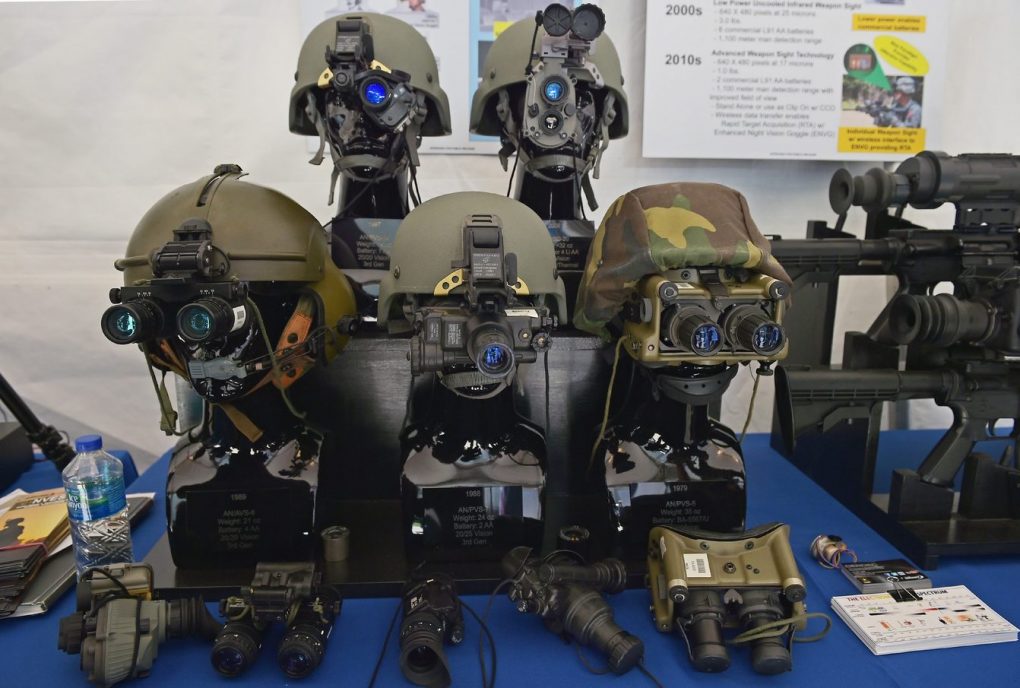
TL;DR:Night vision technology has moved faster in the last five years than in the previous twenty. Thin-filmed and filmless tubes from L3Harris and Elbit have pushed performance metrics that were mil-spec into commercial availability. White phosphor is now the standard, not the upgrade. Housing features like manual gain control, articulation, and auxiliary power ports have migrated from high-end units to mid-tier options. If you bought night vision before 2020, you’re working with yesterday’s technology at today’s prices. Here’s what’s actually changed and why it matters for your next purchase.
Night Vision Technology in 2026: What’s Actually Changed (And What It Means for Buyers)
I’m not going to start this article by telling you night vision has been around for decades. You know that. What you might not know is how dramatically the technology has shifted in just the last few years, and how those shifts affect what you should be buying today.
The night vision market going into 2026 looks nothing like it did in 2020. Specifications that required government contracts five years ago are now available to civilians. Features that defined flagship units have become standard on mid-tier housings. And the gap between “good enough” and “elite” has narrowed considerably.
Let’s break down what’s actually changed.
Tube Technology: Where the Real Performance Gains Are
The image intensifier tube is the engine of any night vision system. The housing is just the platform. Understanding what’s happened in tube development explains why modern units outperform their predecessors so dramatically.
Thin-Filmed and Filmless Technology
Traditional Gen 3 tubes use an ion barrier film on the microchannel plate to extend tube life. The trade-off: that film reduces light transmission and image clarity. Thin-filmed tubes reduced that barrier, improving performance while maintaining longevity. Filmless tubes, like L3Harris’s UNFILMED line, eliminate it entirely, maximizing photon transmission at the cost of theoretical tube life.
In practice, filmless tubes deliver noticeably cleaner images with better low-light performance. The lifespan trade-off is largely academic for most users; you’ll upgrade housings before you burn through a quality filmless tube.
Elbit XLSH: Low-Light Performance Without the Halo
Elbit Systems of America’s XLSH (Extra Low Signal Halo) tubes address one of the persistent complaints about high-performance intensifiers: halo around bright light sources. XLSH tubes maintain excellent signal-to-noise ratios while dramatically reducing bloom and halo effects. For users operating in mixed-light environments (urban settings, vehicle operations, areas with artificial lighting), XLSH tubes provide cleaner images without sacrificing sensitivity.
FOM Accessibility Has Changed Everything
Figure of Merit, the product of resolution and signal-to-noise ratio, used to be the clearest dividing line between commercial and military-grade tubes. A 2000+ FOM tube was mil-spec territory. Today, Elbit commercial tubes routinely ship in the 2100-2400 FOM range. L3Harris thin-filmed and filmless offerings push higher.
What this means: the commercial buyer in 2026 has access to tube performance that special operations units were using a decade ago. The floor has risen dramatically.
Photonis Echo: A Legitimate Entry Point
European manufacturer Photonis produces the Echo white phosphor tube. Technically not Gen 3 (it uses a different photocathode material), it delivers performance that competes with entry-level Gen 3 American tubes at a lower price point. For budget-conscious buyers or those in countries with ITAR restrictions on American tubes, Photonis offers a legitimate path into quality night vision.
White Phosphor Is the Standard Now
Five years ago, white phosphor tubes commanded a premium over traditional green phosphor. Today, white phosphor is the default configuration for most serious users. The black-and-white image provides better contrast perception, reduced eye strain during extended use, and more natural depth perception. Green phosphor units are still available, and some users prefer them, but white phosphor has won the market.
Housing Features That Used to Be Premium
Tube technology gets the headlines, but housing features determine how you actually use the device. Several features that defined flagship units five years ago have become standard or near-standard.
Manual Gain Control
Manual gain control lets you adjust tube amplification based on ambient light. Reduce gain in brighter conditions to prevent washed-out images and extend tube life. Increase gain in near-total darkness to pull maximum detail from the scene.
Five years ago, manual gain was a premium feature. Today, units like the DTNVS-MG, Nighthawk-MG, and Manticore-R all include manual gain as standard. The “MG” designation specifically indicates manual gain capability. If you’re buying a dual-tube system in 2026 and it doesn’t have manual gain, you’re buying outdated design.
Articulation
Articulating housings allow each pod to rotate upward independently. This enables faster transitions (flip up without removing from your mount) and triggers independent pod shutoff on most designs, saving battery and eliminating visible tube glow when stowed.
Articulation is now standard on quality dual-tube housings. The DTNVS-MG, RNVG-A, Katana Molded, and Manticore-R all articulate. Non-articulating designs like the EOTech BinoNV-c exist for specific use cases but represent the exception rather than the rule.
Auxiliary Power
Auxiliary power ports, typically LEMO connections, allow external battery packs for extended runtime. Critical for vehicle operations, long-duration missions, or any scenario where swapping CR123 batteries is impractical.
The Nighthawk-MG, RNVG-A, and Manticore-R all include auxiliary power capability. This was a distinguishing feature on high-end units; now it’s expected on anything marketed for professional use.
IPD Stops
IPD stops lock your interpupillary distance setting so the pods return to the same alignment every time you deploy. Small feature, significant impact on speed. The Manticore-R and Katana Molded include IPD stops; most other housings do not.
Construction: Polymer vs. Aluminum
Housing construction has diversified rather than consolidated. Both polymer and 7075-T6 aluminum designs have proven themselves in hard use.
Polymer construction, used in the DTNVS-MG and Katana Molded, offers significant weight savings. The DTNVS platform has extensive operational history demonstrating durability in field conditions. For users prioritizing helmet weight or extended wear, polymer makes sense.
Aluminum construction, used in the Nighthawk-MG, RNVG-A, and Manticore-R, provides maximum rigidity and impact resistance. For extreme environments or users who prioritize durability over weight, aluminum is the choice.
Neither is objectively better. It’s a trade-off based on your priorities.
Fusion Systems: When Two Sensors Beat One
Fusion systems overlay thermal imaging data onto night vision imagery, combining the detection capability of thermal with the identification capability of image intensification.
The most common implementation is clip-on thermal overlay devices like the COTI (Clip-On Thermal Imager), which mounts in front of your night vision objective lens and projects thermal data into your field of view. This lets you detect heat signatures (people, animals, vehicles) that might not be visible through image intensification alone, while maintaining the detail and depth perception that night vision provides.
Fusion makes the most sense for:
- Hunting and predator control where detection range matters
- Security applications covering large areas
- Search and rescue operations
- Any scenario where you need to find targets before you can identify them
Dedicated thermal devices still outperform fusion overlays for pure thermal detection. But for users who need both capabilities and can only wear one device, fusion provides genuine tactical advantage.
Clip-On Night Vision: Protecting Your Day Zero
For precision rifle applications, clip-on night vision devices mount between your day optic and the target, adding night capability without disturbing your established zero.
The EOTech ClipNV exemplifies this category. Aircraft-grade aluminum construction rated for .50 caliber recoil. Compatible with 1-12x day optics. Manual gain control and auto-gated power supply with automatic bright-light cutoff. Mounts directly to Picatinny rails with an integrated accessory rail for IR illuminators or designators.
For hunters running precision rifles or professional users who need night capability on an existing weapons system, clip-on devices provide the solution without requiring dedicated night optics or sacrificing daylight performance.
Applications: Where This Technology Gets Used
Hunting and Predator Control
Night vision has transformed predator control operations. Thermal for detection, image intensification for identification and shot placement. The combination of a quality binocular system for scanning and observation with a clip-on device for the rifle covers the full mission profile.
Property and Rural Security
For large properties, ranches, and rural locations, night vision provides awareness that cameras and motion sensors cannot match. Active observation beats passive recording. A PVS-14 monocular handles basic security checks; dual-tube systems provide the depth perception needed for extended patrolling or vehicle operations.
Professional Applications
Law enforcement, search and rescue, private security: professional users have driven most night vision development. The good news for civilian buyers is that development has pushed capability downstream. The technology protecting your property tonight is the same technology that was protecting forward operating bases a decade ago.
What This Means for Buyers
If you’re entering the night vision market in 2026, you’re buying at the best time in history. Performance that required government contracts is commercially available. Features that defined flagship units are standard on mid-tier housings. Tube technology has matured to the point where even “entry-level” Gen 3 delivers performance that would have been remarkable a decade ago.
The flip side: if you’re running night vision you bought before 2020, you’re working with yesterday’s technology. The gap between legacy units and current production is substantial. Upgrading isn’t about chasing marginal gains; it’s about accessing a fundamentally different level of capability.
Start with the tube. That’s where performance lives. Then match the housing to your use case: weight versus durability, feature set versus budget. We’ll help you get it right.
Ready to Upgrade?
Dual-Tube Systems:
- DTNVS-MG — Lightweight polymer, manual gain, proven reliability
- Nighthawk-MG — Aluminum construction, manual gain, aux power
- Manticore-R — Full-feature flagship with lifetime warranty
- RNVG-A — Aluminum, onboard IR, aux power
- Katana Molded — Minimalist polymer with lifetime warranty
Monoculars:
- PVS-14 — The standard for helmet-mounted monoculars
Clip-On Devices:
- EOTech ClipNV — Clip-on night vision for precision rifles
Questions? Contact our team — we’ll help you spec the right system for your mission.
Frequently Asked Questions
What is the difference between thin-filmed and filmless night vision tubes?
Traditional Gen 3 tubes use an ion barrier film on the microchannel plate to extend tube life, but this film reduces light transmission. Thin-filmed tubes use a reduced barrier, improving image clarity while maintaining reasonable longevity. Filmless tubes, like L3Harris UNFILMED, eliminate the barrier entirely for maximum light transmission. Filmless tubes deliver the cleanest images but have theoretically shorter lifespans, though most users will upgrade housings before tube degradation becomes an issue.
What does Figure of Merit (FOM) mean and why does it matter?
Figure of Merit is calculated by multiplying a tube’s resolution (line pairs per millimeter) by its signal-to-noise ratio. Higher FOM generally indicates better overall performance: sharper images with less grain in low light. A 2000 FOM tube was considered mil-spec five years ago; today, commercial Elbit tubes routinely ship at 2100-2400 FOM. FOM is useful for comparison but doesn’t capture everything. Halo performance, photocathode sensitivity, and manufacturing consistency also matter.
Is white phosphor better than green phosphor?
White phosphor produces a black-and-white image rather than the traditional green. Most users find white phosphor provides better contrast perception, more natural depth perception, and reduced eye strain during extended use. Green phosphor isn’t inferior (some users prefer it), but white phosphor has become the market standard for serious applications. It’s preference, not performance, that separates them.
What is manual gain control and do I need it?
Manual gain control allows you to adjust tube amplification based on lighting conditions. Lower gain in brighter environments prevents image washout and extends tube life. Higher gain in very dark conditions maximizes available detail. Automatic gain control works, but manual control gives you more flexibility. For 2026 dual-tube purchases, manual gain should be considered standard. Units without it represent older design philosophy.
What makes Elbit XLSH tubes different?
XLSH (Extra Low Signal Halo) tubes are designed to reduce the halo and bloom effect around bright light sources while maintaining excellent signal-to-noise performance. Standard high-performance tubes can bloom significantly around streetlights, vehicle headlights, or muzzle flash. XLSH tubes handle mixed-light environments better, making them ideal for urban operations or any setting with artificial lighting.
Are Photonis tubes as good as American Gen 3?
Photonis Echo white phosphor tubes use different photocathode technology than American Gen 3 tubes, so direct comparison is complicated. Performance-wise, Photonis competes with entry-level Gen 3 at a lower price point. For budget-conscious buyers or international customers facing ITAR restrictions on American tubes, Photonis offers a legitimate path into quality night vision. For maximum performance, American thin-filmed or filmless tubes still lead.
What is the advantage of articulating night vision housings?
Articulating housings allow each pod to rotate upward independently. This enables quick stowage without removing the unit from your helmet mount and typically triggers automatic pod shutoff, saving battery and eliminating visible tube glow when the unit is flipped up. Articulation has become standard on quality dual-tube systems; non-articulating designs now serve niche applications rather than the mainstream market.
When should I consider clip-on night vision instead of dedicated night optics?
Clip-on devices like the EOTech ClipNV mount between your existing day optic and the target, adding night capability without changing your zero. This makes sense when you’ve invested in quality day optics with established ballistic data, when you need both day and night capability without carrying multiple rifles, or when you want to maintain your daytime sight picture and muscle memory. Dedicated night optics may offer better performance, but clip-ons provide flexibility.
What is fusion night vision and when does it make sense?
Fusion systems overlay thermal imaging onto night vision imagery, combining thermal’s detection capability with image intensification’s identification capability. Clip-on thermal devices like COTI project thermal data into your night vision field of view. Fusion makes sense when you need to detect heat signatures at distance (predator hunting, large property security, search and rescue) while maintaining the detail that night vision provides for identification and engagement.
How do I choose between polymer and aluminum housing construction?
Polymer housings like the DTNVS-MG and Katana Molded offer significant weight savings, which is important for helmet comfort during extended wear. Both have proven durable in field conditions. Aluminum housings like the Nighthawk-MG, RNVG-A, and Manticore-R provide maximum rigidity and impact resistance for extreme environments. Neither is objectively better; choose based on whether weight or durability matters more for your application.