

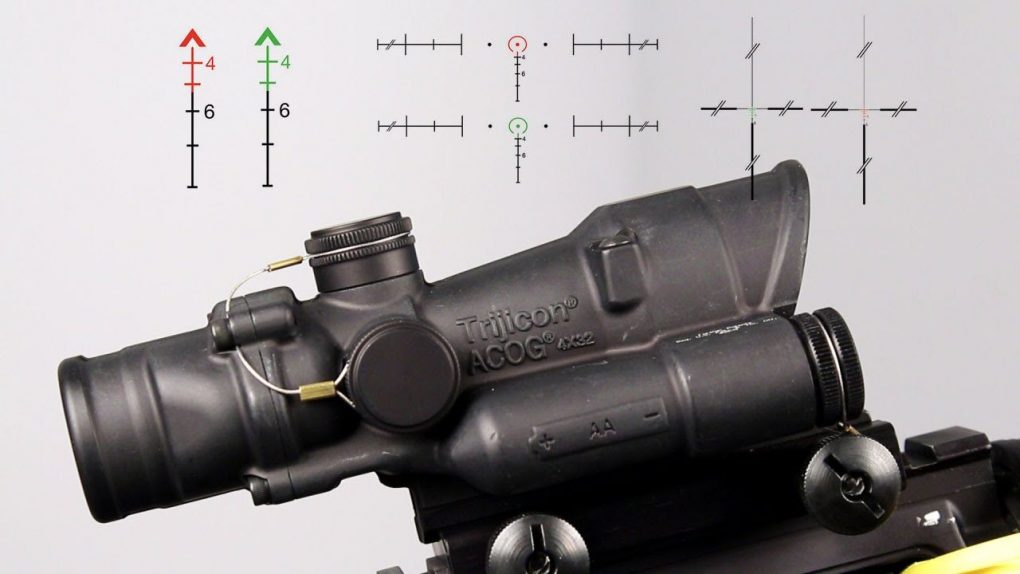
TL;DR: You have five main choices with Trijicon ACOG reticles: Crosshair (precision), Chevron (speed + accuracy), Horseshoe-Dot (versatility), Triangle (CQB speed), and specialized BDC layouts. Picking the right one isn’t just about preference—it’s about matching the optic to your specific mission set.
Let’s be real: The Trijicon Advanced Combat Optical Gunsight (ACOG) is the gold standard for general-purpose combat optics. It has been since 1987. But simply slapping an ACOG on your rifle doesn’t guarantee performance. The durability is legendary, sure, but the reticle is where the rubber meets the road.
I see guys get this wrong all the time. They buy based on what looks cool rather than what works for their application. Selecting the right pattern dictates your acquisition speed, your precision at depth, and how effectively you can engage under stress. This guide breaks down the technical reality of each reticle pattern so you can stop guessing and start hitting.
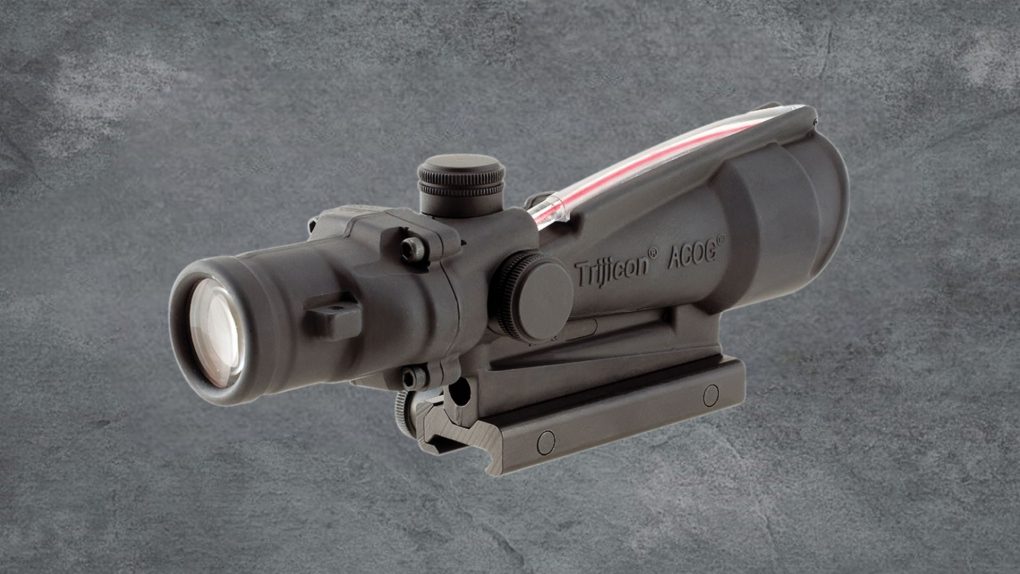
Why the ACOG Design Endures
Trijicon built the ACOG to solve a specific problem: Iron sights are reliable but slow and imprecise at distance; variable scopes are precise but fragile. The ACOG bridged that gap. It’s a fixed-magnification tank designed to survive things that would destroy lesser optics.
We trust this platform at Steele Industries because it aligns with our own philosophy on gear:
- The Dual Illumination System: Fiber optics for the day, tritium for the dark. No electronics to fail. No batteries to leak.
- Fixed Magnification: Usually 4x. It eliminates the complexity of moving parts inside the housing.
- Forged Housing: If you break an ACOG housing, you probably didn’t survive the impact either.
But the genius is in the glass. The reticles aren’t wire; they are etched directly into the prism. This means the point of aim doesn’t shift under recoil.
Reticle Pattern Breakdown
You generally have five categories to choose from. Don’t overcomplicate this—look at your primary use case.
| Reticle Type | Primary Use Case | Acquisition Speed | Precision Rating | Optimal Range |
|---|---|---|---|---|
| Crosshair | Precision/DMR | Moderate | Highest | 300-600m |
| Chevron | General Combat | Fast | High | 0-500m |
| Triangle | CQB / Heavy Recoil | Fastest | Moderate | 0-300m |
| Horseshoe-Dot | Multi-role/Recce | Fast | High | 0-500m |
| BDC | Ranging at Distance | Moderate | High | 200-800m |
1. The Crosshair: Old School Precision
The crosshair is exactly what it sounds like. It’s the traditional choice, and for a Designated Marksman (DM) role, it’s hard to beat. The intersection is incredibly fine, meaning you aren’t obscuring the target.
The Trade-off: It’s slower. In a dynamic, high-stress environment (like clearing a structure), your eye has to work harder to find that thin intersection compared to a giant glowing triangle. If your game is punching paper or hitting steel at 600 meters, go Crosshair. If you need speed, look elsewhere.
2. The Chevron: The Combat Standard
There is a reason the Chevron is the most common military issue. It’s the best compromise between speed and accuracy. The inverted “V” draws your eye instantly.
Here is why I like it: You have an infinitely small aiming point at the very tip of the chevron for long-range shots. But, because the chevron is open at the bottom, you don’t lose sight of the impact area or the target’s beltline. It gives you immediate feedback.
Most TA31 models use this with a built-in BDC (Bullet Drop Compensator). You zero the tip at 100m, and use the legs/stadia lines for 200, 300, and out to 800m. It’s intuitive.
3. The Horseshoe-Dot: The Hybrid
Think of this as the “heavy hitter” reticle. It combines a center dot (for precision) with a large semi-circle (horseshoe) surrounding it. This is phenomenal for rapid engagement.
In close quarters (CQB), you essentially use the horseshoe as a giant red dot sight—put the target in the circle and squeeze. At distance, you focus on the center dot. It keeps your peripheral vision open and allows for very fast target transitions.
4. The Triangle: Pure Speed
If you are running a machine gun or you are strictly operating inside 200 yards, look at the Triangle. It is a big, bold, geometric shape. You cannot miss it.
The downside? It’s a barn door. The tip of the triangle allows for some precision, but the body of the triangle is large. At 400+ meters, that triangle is going to cover up a significant portion of your target, making PID (Positive Identification) and precise shot placement difficult. This is a specialized tool for specific jobs.
5. BDC and Ranging Systems
Let’s talk about bullet drop compensation. Trijicon calibrates these reticles for specific loads (usually M855 or M193 out of a 14.5″ or 20″ barrel). If you buy a BDC reticle calibrated for 5.56 and slap it on a .300 Blackout, your holds are going to be wrong. Period.
When used correctly, the horizontal hash marks aren’t just for decoration; they represent the width of a human torso (19 inches) at that distance. It’s a passive ranging system. If the target fits between the lines, you know the range, and you know the hold. No math required.
A Note on Night Vision and Illumination
At Steele, we live in the dark. The ACOG’s dual illumination is critical for passive aiming under night vision. Because the tritium glows on its own, you can look through your NVGs, through the optic, and see a crisp reticle without emitting an IR laser signature.
However, keep in mind: tritium has a half-life. After about 12 years, that glow dims. It’s still a usable day optic, but your low-light capability will degrade. Color choice matters here too—Green tends to appear brighter to the human eye than Red or Amber, which is something to consider if your eyes are aging.
Dominick’s Final Verdict: How to Choose
Stop looking for the “best” reticle. It doesn’t exist. Look for the right tool for the job.
- Go Chevron if you want the “do-it-all” combat optic. It’s the standard for a reason.
- Go Crosshair if you are a precision shooter who values groups over split times.
- Go Horseshoe-Dot if you want a modern feel that bridges the gap between a red dot and a scope.
- Go Triangle if you need to hit man-sized targets fast and don’t care about sub-MOA precision.
Your optic is a life-saving device. Treat the selection process with that level of seriousness.
Need help configuring a Trijicon ACOG setup or pairing it with the right clip-on thermal or night vision? That’s what we do.
Contact Steele Industries directly. We don’t just sell this stuff; we use it.
Phone: (800) 674-7302
Email: sales@steeleindinc.com
Frequently Asked Questions
What is the best all-around ACOG reticle?
For 90% of users, the Chevron with BDC is the answer. It gives you the best balance of a fine aiming point for distance and a bold shape for up-close speed.
Does the battery-free illumination actually work?
Yes. The fiber optic adjusts automatically to ambient light—sometimes too well (it can get very bright in direct sun, which is why you see guys taping over the fiber optic line). The tritium takes over in low light. It’s bombproof.
Can I swap the reticle later?
No. The reticle is physically etched into the prism glass inside the sealed housing. You cannot swap it out like a video game loadout. Buy the right one the first time.
Green vs. Red illumination?
Green is generally perceived as brighter by the human eye and is often preferred for low-light/night vision use. Red offers excellent contrast against green foliage/woodland environments.
Are ACOGs actually “Night Vision Compatible”?
Yes, in the sense that you can use them for passive aiming (looking through the tube). The tritium provides a distinct aiming point that NVGs can pick up easily without needing an active IR illuminator.